January 2026

Famous Travelers Stories, Travel Tales

Xuanzang incredible Journey to India : Ancient Travels & Buddhism

The incredible journey of Xuanzang, the Chinese monk who traveled to India in the 7th century in search of authentic Buddhist teachings and sacred knowledge. Leaving behind the comfort of his homeland, Xuanzang crossed deserts, mountains, and hostile territories to reach the great centers of learning in ancient India, including Nalanda University. During his long stay, he studied Buddhist philosophy, collected sacred texts, and closely observed Indian society, culture, and traditions. His detailed travel accounts became one of the most valuable historical records of ancient India, offering rare insights into its religion, education system, and daily life during a remarkable period of history. In the vast history of travel, few journeys rival the courage, curiosity, and dedication of Xuanzang (also known as Hiuen Tsang)—a Chinese Buddhist monk whose travels across ancient India in the 7th century changed the understanding of Indian civilization forever. His journey was not for conquest or trade, but for knowledge, faith, and truth. At a time when travel was dangerous, borders were strict, and roads were uncertain, Xuanzang undertook one of the most extraordinary journeys in human history, leaving behind a priceless record of ancient India. Who Was Xuanzang? Xuanzang was born in 602 CE in China during the Tang Dynasty. From a young age, he showed a deep interest in Buddhism and religious texts. However, he soon realized that the Buddhist scriptures available in China were incomplete and often contradictory. After that he decided to start his journey to Ancient India India, the birthplace of Buddhism, held the original texts and teachings. Determined to learn directly from the source, Xuanzang decided to travel to India—despite the Chinese emperor banning foreign travel at the time. The Daring Journey Begins of Xuanzang The incredible journey of Xuanzang, the Chinese monk who traveled to India in the 7th century in search of authentic Buddhist teachings and sacred knowledge. Leaving behind the comfort of his homeland, Xuanzang crossed deserts, mountains, and hostile territories to reach the great centers of learning in ancient India, including Nalanda University. During his long stay, he studied Buddhist philosophy, collected sacred texts, and closely observed Indian society, culture, and traditions. His detailed travel accounts became one of the most valuable historical records of ancient India, offering rare insights into its religion, education system, and daily life during a remarkable period of history. In 629 CE, Xuanzang secretly left China, embarking on a journey that would last nearly 17 years. He crossed the harsh Gobi Desert, faced extreme heat, hunger, and bandits, and passed through Central Asia via the Silk Road. Many travelers perished on this route, but Xuanzang survived through sheer determination and faith. His travel itself stands as a testament to human endurance and spiritual commitment. Entering Ancient India Xuanzang entered India through the northwestern regions and was immediately struck by the land’s diversity. Over the next several years, he traveled across major Indian kingdoms, including: He carefully documented India’s cities, monasteries, social life, economy, political systems, and religious practices. Nalanda University: The Heart of Learning One of the most important chapters of Xuanzang’s journey was his time at Nalanda University, the world’s greatest center of learning at that time. Xuanzang spent several years studying at Nalanda, mastering Buddhist philosophy, logic, Sanskrit, and ancient texts. He studied under renowned scholars and participated in debates that attracted students from across Asia. Nalanda impressed Xuanzang so deeply that his descriptions later helped historians understand its academic structure, libraries, and daily life. Meeting King Harsha Xuanzang developed a close relationship with King Harsha of Kannauj, one of the most powerful rulers of ancient India. King Harsha respected Xuanzang’s wisdom and supported his religious missions. Under Harsha’s patronage, Xuanzang participated in large Buddhist assemblies and interfaith debates, where scholars of Buddhism, Hinduism, and Jainism openly exchanged ideas—showing India’s long tradition of intellectual tolerance. Observations of Indian Society Xuanzang’s travel accounts go far beyond religion. He provided detailed observations of: He admired India’s respect for learning, non-violence, and hospitality, while also noting social challenges honestly. Impact of Xuanzang journey to India on Buddhism After returning to China in 645 CE, Xuanzang carried hundreds of Buddhist manuscripts, statues, and relics with him. He spent the rest of his life translating these texts into Chinese. His most famous work, “Great Tang Records on the Western Regions”, remains one of the most reliable historical sources on ancient India. Much of what historians know today about India’s geography and political history of that era comes from Xuanzang’s writings. Why Xuanzang’s Journey to India was Important Xuanzang was more than a traveler—he was a cultural bridge between India and China. His journey strengthened intellectual, religious, and diplomatic ties between civilizations. For modern travelers and historians, Xuanzang represents: His journey reminds us that travel can preserve history, spread wisdom, and connect civilizations across time. Conclusion Xuanzang’s incredible journey through ancient India stands as one of the greatest travel stories ever told. Facing deserts, dangers, and distance, he pursued truth with unwavering determination. Centuries later, his footsteps still echo across India’s ancient ruins, universities, and sacred sites. Xuanzang’s journey is not just history—it is an inspiration for every traveler who believes that the journey itself can change the world.
Beaches, Destinations

Night Swimming & Neon Tides: Where to Find Bioluminescent Beaches

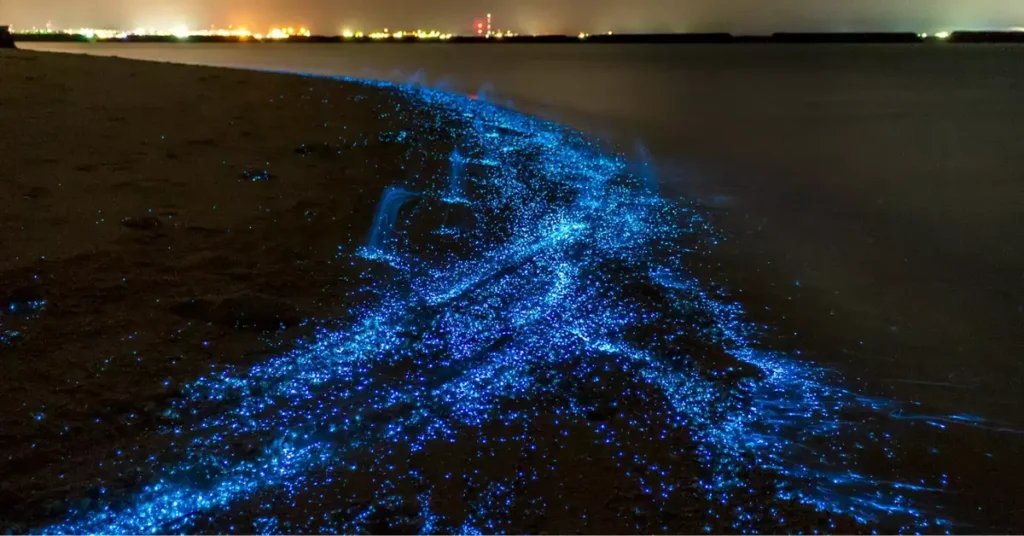
Imagine stepping into the ocean under the cloak of night, and with every movement, the water around you bursts into a shimmering, electric blue light. Each splash creates a galaxy of fleeting stars, and as you swim, your body becomes outlined in an ethereal glow. This isn’t a scene from a sci-fi movie; it’s the breathtaking reality of bioluminescent beaches, where the ocean itself puts on a dazzling light show. Bioluminescence, the production and emission of light by a living organism, is one of nature’s most spectacular marvels. In marine environments, this glow is often caused by microscopic plankton, primarily dinoflagellates, that emit light when disturbed. These “neon tides” are rare, fragile, and utterly unforgettable. If you’ve ever dreamt of swimming in liquid starlight, read on – we’re diving into where to find these incredible phenomena and how to make the most of your magical encounter. What Exactly is Bioluminescence? The Science Behind the Magic Before we jump into destinations, let’s briefly understand what’s happening. The glowing effect you see in the water is typically caused by millions of single-celled organisms called dinoflagellates. These tiny creatures have a built-in chemical reaction that allows them to produce light when agitated – whether by a breaking wave, a swimming fish, or your hand passing through the water. Think of it as their defense mechanism: when a predator comes near, they flash, startling the attacker and potentially drawing the attention of their predators. For us, it’s a stunning natural display. Not all bioluminescent events are created equal; some are faint and subtle, while others are so bright they can illuminate your surroundings. The intensity often depends on the concentration of the plankton, water conditions, and the absence of light pollution. The World’s Most Mesmerizing Bioluminescent Beaches & Bays While bioluminescence can occur in various ocean locations, some spots are renowned for their consistent and spectacular displays. These are your best bets for witnessing the neon tides. 1. Mosquito Bay, Vieques, Puerto Rico Often hailed as the brightest bioluminescent bay in the world. Mosquito Bay isn’t just a bioluminescent bay; it’s a phenomenon. Located on the southern shore of the island of Vieques (a short ferry ride from mainland Puerto Rico), this bay holds the Guinness World Record for the brightest bioluminescent display. The water here is so dense with Pyrodinium bahamense dinoflagellates that even a small splash can create a brilliant blue flash. What to Expect: Due to its protected status, motorized boats are prohibited. You’ll experience the magic from kayaks or electric boats, guided by knowledgeable locals. Swimming is often permitted by tour operators, offering an unparalleled chance to immerse yourself in the glowing waters. Best Time to Visit: Dark, moonless nights are key. Plan your trip around the new moon cycle for the most intense glow. 2. Luminous Lagoon, Falmouth, Jamaica Where the Martha Brae River meets the Caribbean Sea. Jamaica’s Luminous Lagoon is another top contender for spectacular bioluminescence. This unique ecosystem where fresh river water mixes with the salty Caribbean creates ideal conditions for billions of dinoflagellates. What to Expect: Tours typically involve boat rides into the lagoon, with opportunities for guided swims. The water here glows a vivid blue, and you can see outlines of fish darting through the shimmering water. Many tours even allow you to jump in and experience the magic firsthand. Best Time to Visit: Like all bioluminescent spots, the darker the night, the better. Consider the hours just before or after the new moon. 3. Toyama Bay, Japan Home to the unique “firefly squid.” Toyama Bay offers a different kind of bioluminescence, courtesy of the Watasenia scintillans, or firefly squid. These small cephalopods gather in massive numbers between March and June, rising to the surface to spawn. What to Expect: Instead of a glowing bay of plankton, you’ll witness the mesmerizing, flashing lights of millions of squid creating a “neon tide” effect. Fishing boats often bring in glowing nets, and special tours are available to view the phenomenon. Best Time to Visit: Peak season is typically from March to early June, particularly during the spring spawning period. 4. Laguna Grande, Fajardo, Puerto Rico A kayak adventure into a glowing world. Puerto Rico is blessed with three bioluminescent bays, and Laguna Grande in Fajardo is another prime example. This bay is unique as it’s connected to the ocean by a narrow, winding canal through a mangrove forest, protecting it from currents and light pollution. What to Expect: The journey itself is part of the magic. You’ll kayak through dark mangrove tunnels, emerging into the open lagoon where the water lights up with every stroke of your paddle. The glow here is incredibly bright and consistent. Best Time to Visit: Again, prioritize moonless nights for the best experience. 5. Big South Fork of the Cumberland River, Tennessee, USA A surprising freshwater bioluminescent spectacle. While most bioluminescence is marine, the Big South Fork River in Tennessee offers a rare freshwater equivalent! Between late May and early September, certain species of glowworms create a stunning display along the riverbanks. What to Expect: This is more about glowing organisms on land (or very near it) rather than in the water you swim in. You’ll need to hike to specific locations within the park to see the tiny, blue-green lights emitted by these unique insects. It’s a different vibe than a bioluminescent bay but equally enchanting. Best Time to Visit: Late May through early September. Research specific viewing trails and conditions beforehand. 6. San Juan Island, Washington, USA Paddling through plankton in the Pacific Northwest. In the Pacific Northwest, particularly around San Juan Island, bioluminescence becomes active during the warmer summer months. Here, the glow is often caused by dinoflagellates Noctiluca scintillans (also known as “sea sparkle”). What to Expect: Kayak tours are the most popular way to experience this. As you paddle through the calm, dark waters, your paddle strokes and the wake of your kayak will illuminate the ocean in a magical blue-green light. It’s a truly

Beaches

Top 5 Luxury Beach Resorts That Are Actually Worth the Splurge

In a world saturated with “luxury” claims, how do you sift through the marketing jargon to find a beach resort that genuinely delivers an unforgettable, once-in-a-lifetime experience? We’re talking about more than just plush towels and infinity pools; we’re talking about places where every detail is meticulously crafted, where service is an art form, and where the natural beauty of the destination is seamlessly integrated into your stay. Forget the overpriced disappointments. Here are five luxury beach resorts that have consistently redefined opulence, service, and sheer natural beauty, making them truly worth every precious penny. 1. The Azure Sanctuary, Maldives Where the Ocean is Your Private Playground If your vision of paradise involves overwater bungalows, vibrant coral reefs just steps from your deck, and a level of privacy that makes the rest of the world feel light-years away, The Azure Sanctuary in the Maldives is your ultimate escape. This isn’t just a resort; it’s a meticulously designed ecosystem of luxury. Why the Splurge is Worth It: From the moment your seaplane touches down on the impossibly clear lagoon, you’re enveloped in an atmosphere of serene exclusivity. Each villa, whether perched over the water or nestled on the pristine sands, comes with its own plunge pool, a dedicated host to cater to your every whim, and direct access to some of the most vibrant marine life on Earth. The dining experiences are a journey in themselves, from gourmet Maldivian fusion under the stars to a subterranean wine cellar offering pairings from around the globe. But beyond the tangible luxuries, it’s the profound sense of peace and the feeling of truly disconnecting in unparalleled beauty that solidifies its value. You’re not just staying at a resort; you’re living a dream. Unique Highlight: Their private marine biologist-led snorkeling excursions take you to secret reefs, offering a deeper appreciation for the Maldivian ecosystem. 2. Casa del Sol, Riviera Maya, Mexico Culinary Excellence Meets Ancient Mysticism Nestled between the ancient Mayan ruins and the Caribbean Sea, Casa del Sol is a testament to sophisticated indulgence blended with deep cultural respect. This resort eschews the typical all-inclusive template for an experience that’s both intimately luxurious and richly authentic. Why the Splurge is Worth It: Casa del Sol redefines the concept of “all-inclusive” by focusing on an immersive, curated experience rather than endless buffets. Your stay includes bespoke excursions to hidden cenotes, private cooking classes delving into ancestral Mayan cuisine, and wellness rituals inspired by ancient traditions. The architecture itself is a masterpiece, harmonizing modern design with natural elements and local artistry. Every suite offers breathtaking ocean views, private terraces, and meticulously crafted interiors that whisper luxury without shouting. The true value lies in the seamless fusion of unparalleled comfort with a genuine connection to the vibrant history and natural wonders of the Riviera Maya, all delivered with impeccable, intuitive service that anticipates your needs before you even voice them. Unique Highlight: The resort’s “Art of Chocolate” experience, from bean to bar, culminating in a tasting paired with artisanal tequilas. 3. The Cliffside Retreat, Santorini, Greece Iconic Views and Unrivaled Romance Perched dramatically on the caldera’s edge, The Cliffside Retreat in Santorini offers an iconic experience that justifies its premium price tag. This is where the legendary sunsets become a personal spectacle, and the Aegean Sea stretches out before you in an endless panorama of blue. Why the Splurge is Worth It: What sets The Cliffside Retreat apart is its masterful blend of traditional Cycladic architecture with ultra-modern amenities, all designed to maximize the awe-inspiring views. Each cave-style suite is a private sanctuary, featuring spacious terraces, private plunge pools, and often, direct sightlines to the caldera. The service is discreet yet omnipresent, ensuring every desire is met with effortless grace. Imagine sipping local Assyrtiko wine as the sky ignites with hues of orange and pink, all from the privacy of your own cliffside jacuzzi. The resort curates exclusive experiences, from private yacht charters exploring volcanic islands to gourmet dining prepared by Michelin-starred chefs using local ingredients. This isn’t just a stay; it’s an immersion into the very essence of Santorini’s magic, designed for discerning travelers seeking unparalleled romance and breathtaking beauty. Unique Highlight: Their exclusive “Caldera Chronicle” photography package, where a professional photographer captures your most memorable moments against the iconic backdrop. 4. Pura Vida Preserve, Costa Rica Sustainable Luxury in a Biodiversity Hotspot For those whose idea of luxury includes waking up to the calls of howler monkeys, exploring pristine rainforests, and relaxing on secluded, wild beaches, the Pura Vida Preserve in Costa Rica offers an unparalleled eco-luxe experience. This isn’t about gilded opulence; it’s about intelligent, sustainable design that immerses you in nature without sacrificing comfort. Why the Splurge is Worth It: Pura Vida Preserve is a pioneer in sustainable luxury, proving that environmental stewardship and five-star service can coexist beautifully. Your accommodation is likely a stunning, open-air villa constructed with natural materials, blurring the lines between indoor and outdoor living. Expect private plunge pools, panoramic ocean or rainforest views, and the constant symphony of the jungle. Guided excursions are included, from private surf lessons on untouched breaks to wildlife treks led by expert naturalists, revealing sloths, monkeys, and exotic birds. The farm-to-table cuisine is exceptional, sourcing ingredients from their own organic gardens or local fishermen. The true value here is the deeply enriching connection to nature, the profound sense of well-being, and the knowledge that your splurge directly supports conservation efforts, making it a luxurious escape with a conscience. Unique Highlight: Their personalized, “Dawn Chorus” birdwatching experience, starting with freshly brewed local coffee on your private terrace. 5. The Royal Sands, Gold Coast, Australia Urban Sophistication Meets Epic Coastal Grandeur If your definition of a luxury beach getaway involves vibrant city life just a stone’s throw from magnificent, expansive beaches, The Royal Sands on Australia’s Gold Coast offers a unique and exhilarating splurge. This resort perfectly blends cosmopolitan chic with direct access to some of the world’s most famous surf breaks and endless

Beaches

Top Beach Getaways for Nature Lovers

Beaches are not just about parties, resorts, and crowds. For true nature lovers, the real magic of a beach lies in untouched shorelines, clear water, coastal forests, wildlife, and the calming rhythm of waves. These beach destinations offer serenity, natural beauty, and a chance to reconnect with the earth. If you’re someone who prefers sunrise walks, salty air, bird calls, and starlit skies over loud music and packed bars, this guide is for you. 1. Radhanagar Beach, Andaman & Nicobar Islands Often ranked among the best beaches in Asia, Radhanagar Beach on Havelock Island is a paradise for nature lovers. Thick tropical forests meet soft white sand, while turquoise waters stretch endlessly into the horizon. The beach is largely untouched by commercialization, making it ideal for peaceful walks, photography, and swimming. Sunsets here are unreal—quiet, dramatic, and soul-calming. Best for: Nature photography, swimming, sunset viewsBest time to visit: October to May 2. Agonda Beach, Goa Goa isn’t just about nightlife. Agonda Beach in South Goa proves that perfectly. This crescent-shaped beach is clean, calm, and surrounded by hills and palm trees. It’s also a nesting site for Olive Ridley turtles, adding to its ecological importance. The vibe is slow and peaceful, with eco-friendly stays and yoga huts instead of loud shacks. Best for: Solo travelers, yoga lovers, turtle spottingBest time to visit: November to March 3. Varkala Beach, Kerala Varkala stands out because of its dramatic cliffs overlooking the Arabian Sea—a rare sight in India. The contrast of red cliffs, green vegetation, and blue waters creates a stunning natural setting. Apart from the beach, Varkala offers natural springs, coastal walks, and breathtaking sunsets. It’s perfect for travelers who enjoy scenic beauty with a spiritual and relaxed atmosphere. Best for: Cliff walks, sunsets, peaceful staysBest time to visit: October to March 4. Gokarna Beaches, Karnataka Gokarna is a dream for nature lovers who want raw coastal beauty without crowds. Beaches like Om Beach, Kudle Beach, Half Moon Beach, and Paradise Beach are surrounded by rocky cliffs and greenery. You can trek from one beach to another, discovering secluded spots along the way. Early mornings and evenings here are especially magical, with misty horizons and calm seas. Best for: Beach trekking, camping, quiet escapesBest time to visit: October to February 5. Marari Beach, Kerala Marari Beach is an unspoiled stretch of sand near Alleppey, known for its tranquil environment and natural charm. Traditional fishing villages, coconut palms, and gentle waves define this serene destination. There are no tourist crowds or noisy activities—just pure coastal life. It’s ideal for travelers who want to slow down and observe nature at its simplest. Best for: Relaxation, village life, eco-staysBest time to visit: September to March 6. Bangaram Island, Lakshadweep If untouched marine life excites you, Bangaram Island is a true hidden gem. Surrounded by coral reefs and crystal-clear lagoons, this island offers some of the best snorkeling and diving experiences in India. There are no crowds, no traffic, and minimal construction—just ocean, sky, and silence. It’s a rare destination where nature completely takes over. Best for: Snorkeling, marine life, isolationBest time to visit: October to May 7. Mandarmani Beach, West Bengal Mandarmani is one of the longest driveable beaches in India and remains relatively peaceful compared to other eastern coastal destinations. The wide shoreline, gentle waves, and open sky make it perfect for long walks and quiet evenings. It’s especially beautiful during sunrise and sunset when the beach feels endless and calm. Best for: Long beach walks, peaceful weekendsBest time to visit: October to February 8. Nusa Penida, Bali (International Pick) For nature lovers willing to travel abroad, Nusa Penida offers dramatic cliffs, untouched beaches, and vibrant marine life. Spots like Kelingking Beach and Atuh Beach showcase raw natural beauty rather than commercial tourism. The island feels wild and adventurous, perfect for travelers seeking breathtaking landscapes and less-crowded shores. Best for: Cliff views, snorkeling, adventureBest time to visit: April to October Tips for Nature-Friendly Beach Travel Final Thoughts Beach travel doesn’t have to be loud or commercial. For nature lovers, the best beach getaways are the ones that offer silence, scenery, and simplicity. Whether it’s a hidden beach in India or a remote island abroad, these destinations prove that nature still thrives where tourism stays respectful. If your idea of a perfect vacation involves ocean breezes, quiet sunsets, and unspoiled beauty, these beach getaways deserve a spot on your travel list.

Hill Stations

Beyond the Postcards: 5 Indian Hill Stations You’ve Probably Never Heard Of

Let’s be real: a “relaxing” trip to Shimla or Manali these days usually involves sitting in a three-hour traffic jam or elbowing your way through a crowded Mall Road just to get a coffee. It’s beautiful, sure, but it’s not exactly the “soul-searching mountain escape” we see in the movies. If you’re like me and you actually want to hear the wind in the trees rather than someone’s car horn, you have to dig a little deeper. India still has these incredible, quiet pockets where life moves slow and the mountains feel massive. If you’re looking to truly disappear for a few days, here are five hidden spots that are still off the radar for most tourists. 1. Gurez Valley, Jammu & Kashmir While everyone else is heading to Gulmarg, those who really know Kashmir go to Gurez. It’s right near the Line of Control, and for a long time, it was almost impossible to visit. That’s exactly why it feels so special. The vibe: It’s like stepping into a time machine. You’ll see traditional wooden houses and the Kishanganga River, which is so blue it looks filtered. The massive pyramid-shaped mountain, Habba Khatoon, looms over everything. What to actually do: Don’t look for luxury resorts here. Just grab a cup of kahwa, sit by the river, and talk to the locals. The Shina people have stories that will keep you captivated for hours. It’s raw, it’s quiet, and it’s arguably the most beautiful place in the country. 2. Chakrata, Uttarakhand About two hours from Dehradun, most people breeze right past the turn-off for Chakrata on their way to Mussoorie. Big mistake. Chakrata is an old British cantonment town, which means it’s kept its old-school charm and hasn’t been taken over by noisy hotels. The vibe: Mist, deep green forests, and absolute silence. It’s surrounded by some of the densest deodar forests in Asia. The highlight: You have to hike to Tiger Falls. It’s a bit of a trek, but standing at the bottom of that massive waterfall without fifty other people taking selfies is a rare feeling. If you want a view that’ll make you feel tiny, head up to Chilmiri Neck at sunset. 3. Ziro Valley, Arunachal Pradesh Ziro is famous for its music festival in September, but if you go any other time of the year, it’s one of the most peaceful places on earth. It’s home to the Apatani tribe, who are famous for their unique facial tattoos and incredibly smart farming. The vibe: Bright green rice fields tucked into a valley of pine trees. It’s a “slow travel” paradise. The highlight: Stay in a local homestay. You’ll eat home-cooked food by a fire, learn about a culture that’s been around for centuries, and realize that you haven’t checked your phone in three days. It’s the ultimate digital detox. 4. Barot Valley, Himachal Pradesh I like to call Barot the “anti-Manali.” It’s a tiny village in the Mandi district that was originally built for a hydro-project in the 1920s. It’s still got this weirdly cool, old-world engineering vibe mixed with wild Himalayan nature. The vibe: It’s a fisherman’s dream. The Uhl River is famous for trout, and the whole valley is just… chill. There are no fancy malls or movie theaters. Just mountains and water. The highlight: Cross the old wooden bridges and just start walking. The trails lead into the Nagru Wildlife Sanctuary, and the air is so clean it actually feels different in your lungs. It’s the kind of place where you go to write a book or finally finish that one you’ve been reading for a year. 5. Meghamalai, Tamil Nadu Deep down south in the Western Ghats, Meghamalai is basically “The High Wavy Mountains.” It’s hidden behind a series of hairpin turns that used to be so bumpy they kept everyone away. The roads are better now, but the crowds still haven’t arrived. The vibe: Imagine being on top of a mountain where the clouds are literally walking through your room. It’s all tea estates and cardamom plantations. The highlight: Wildlife spotting. Because it’s so quiet, you actually have a decent chance of seeing wild elephants or Nilgiri Tahrs just doing their thing near the dams. It’s green, it’s misty, and it’s the best-kept secret in Tamil Nadu. A Few Things to Keep in Mind If you’re going to these places, remember they aren’t built for mass tourism: Which one of these sounds like your kind of escape? I can help you figure out the best way to get to any of them!

Hill Stations

Escape the Rush: Unveiling India’s Hidden Hill Station Gems for 2026

The year is 2026. The world is buzzing, travel is back with a vengeance, and everyone’s chasing that perfect mountain escape. But let’s be honest, the usual suspects – Shimla, Manali, Darjeeling, Ooty – while undeniably beautiful, are often bursting at the seams. For the true connoisseur of tranquility, the seeker of unspoiled vistas and authentic local charm, the real magic lies beyond the well-trodden paths. If your idea of a hill station retreat involves the symphony of silence, the crisp kiss of untamed air, and landscapes that feel like your own private masterpiece, then you’re in the right place. We’ve scoured the nooks and crannies of India’s majestic ranges to bring you a curated list of less crowded hill stations that promise an unforgettable escape in 2026. Get ready to update your travel wish list! Why Less Crowded is the New Luxury Before we dive into our hidden gems, let’s talk about why opting for the road less traveled is more important than ever: Your 2026 Itinerary: India’s Undiscovered Mountain Paradises 1. Gavi, Kerala: The Serene Southern Secret Move over, Munnar! Tucked away in the Pathanamthitta district of Kerala, Gavi is an ecotourism paradise often overshadowed by its more famous neighbours. This pristine forest village, part of the Periyar Tiger Reserve, offers an unparalleled blend of adventure and tranquility. Why Gavi for 2026? Access to Gavi is regulated, ensuring crowd control and preserving its delicate ecosystem. Think dense shola forests, rolling grasslands, and a high chance of spotting elephants, sambar deer, and even a leopard if you’re lucky. What to Do: 2. Tawang, Arunachal Pradesh: The Eastern Himalayan Enigma For those willing to venture further east, Tawang is a spiritual and scenic marvel. Perched at an altitude of over 10,000 feet, this Buddhist haven in Arunachal Pradesh offers dramatic landscapes, ancient monasteries, and a profound sense of peace. While not entirely unknown, its remote location keeps the overwhelming crowds at bay. Why Tawang for 2026? The journey to Tawang itself is an adventure, traversing winding roads through breathtaking valleys and high mountain passes. The reward is a destination steeped in history, culture, and spectacular views of the Eastern Himalayas. What to Do: 3. Chaukori, Uttarakhand: The Kumaon’s Quiet Crown Nestled in the Pithoragarh district of Uttarakhand, Chaukori is a small, enchanting hill station that remains surprisingly untouched. Offering spectacular, unobstructed views of the Nanda Devi and Panchachuli peaks, it’s a haven for those seeking solitude and raw natural beauty in the Kumaon Himalayas. Why Chaukori for 2026? Unlike its busier neighbours, Chaukori retains its rustic charm. It’s surrounded by tea gardens and fruit orchards, providing a tranquil setting perfect for rejuvenation. The local hospitality is warm and inviting, making you feel truly at home. What to Do: 4. Ponmudi, Kerala: The Golden Peak of the South Another gem from Kerala, Ponmudi, meaning “The Golden Peak,” is a picturesque hill station just a short drive from Thiruvananthapuram. With its winding roads, mist-laden valleys, and emerald-green forests, it offers a quick yet complete escape into nature without the tourist bustle. Why Ponmudi for 2026? Ponmudi’s appeal lies in its accessibility combined with its relatively untouched beauty. It’s perfect for a weekend getaway where you can truly disconnect. The air is fresh, the views are stunning, and the sense of calm is immediate. What to Do: 5. Kalimpong, West Bengal: The Quaint Himalayan Town While Darjeeling basks in the limelight, its quieter, charming cousin Kalimpong offers a more relaxed Himalayan experience. Located overlooking the Teesta River, Kalimpong is famous for its flower nurseries, colonial architecture, and stunning views of the Kangchendzonga. Why Kalimpong for 2026? Kalimpong has a distinct, laid-back vibe compared to Darjeeling. It’s a cultural melting pot with a mix of Nepali, Lepcha, and Bhutia influences. The town feels authentic, allowing for a deeper connection with the local life. What to Do: 6. Mandi, Himachal Pradesh: The “Varanasi of the Hills” Without the Crowds Often a stopover on the way to Manali or Kullu, Mandi itself is a beautiful ancient town nestled on the banks of the Beas River. Known as the “Varanasi of the Hills” due to its numerous ancient temples, it offers a spiritual and scenic retreat without the tourist frenzy of its more famous Himachali counterparts. Why Mandi for 2026? Mandi provides a unique blend of history, spirituality, and natural beauty. It’s a living, breathing town where daily life unfolds authentically, away from the commercial glare of typical tourist hubs. The surrounding valleys offer pristine landscapes for exploration. What to Do: Planning Your Escape to Serenity When planning your trip to these less crowded havens in 2026, remember: In an increasingly bustling world, the true luxury of travel lies in finding those pockets of peace, where nature remains untamed and culture thrives authentically. These hidden hill stations of India offer just that – an invitation to slow down, breathe deep, and truly connect with the majestic beauty of the mountains. So, in 2026, skip the queues, bypass the crowds, and set your compass for tranquility. Your soul will thank you for it.

Destinations, Hill Stations

Most Beautiful Hill Stations in India You Must Visit Once

India is a land of diversity, and its hill stations are some of the most breathtaking places the country has to offer. Nestled in the lap of the Himalayas, the Western Ghats, and other mountain ranges, hill stations provide a refreshing escape from the chaos, heat, and noise of city life. With cool weather, lush greenery, misty mornings, and stunning landscapes, these destinations are perfect for families, couples, and solo travelers alike. If you are planning a peaceful retreat or an adventure-filled vacation, here are the most beautiful hill stations in India you must visit at least once in your lifetime. 1. Shimla, Himachal Pradesh Shimla, the “Queen of Hill Stations,” remains one of India’s most popular and scenic destinations. Surrounded by pine and deodar forests, Shimla offers colonial-era architecture, pleasant weather, and panoramic mountain views. The Mall Road, Ridge, and Jakhoo Temple are must-visit attractions. During winter, the town transforms into a snowy wonderland, making it ideal for families and honeymooners. Shimla’s charm lies in its old-world beauty combined with modern comforts. 2. Manali, Himachal Pradesh Manali is a perfect blend of natural beauty and adventure. Located along the Beas River, this hill station is famous for snow-capped peaks, lush valleys, and thrilling activities like paragliding, skiing, and river rafting. Rohtang Pass and Solang Valley are major highlights. Whether you want to relax in nature or seek adventure, Manali offers something for everyone. 3. Mussoorie, Uttarakhand Often called the “Queen of the Hills,” Mussoorie is known for its misty hills, waterfalls, and colonial charm. Situated near Dehradun, it offers stunning views of the Doon Valley and the Himalayas. Popular spots include Kempty Falls, Gun Hill, and Camel’s Back Road. Mussoorie is especially loved by families due to its easy accessibility, pleasant climate, and scenic beauty 4. Nainital, Uttarakhand Nainital is one of the most picturesque hill stations in India, centered around the beautiful Naini Lake. Boating in the lake, visiting Naina Devi Temple, and enjoying cable car rides are popular activities. Surrounded by hills and dotted with colorful houses, Nainital offers a perfect mix of romance, relaxation, and family-friendly attractions 5. Darjeeling, West Bengal Famous for its tea gardens and views of Mount Kanchenjunga, Darjeeling is a hill station that feels straight out of a postcard. The Darjeeling Himalayan Railway, a UNESCO World Heritage Site, adds to its charm. Tiger Hill, Batasia Loop, and tea estate tours are unmissable experiences. The cool climate and cultural richness make Darjeeling a unique destination. 6. Ooty, Tamil Nadu Ooty, also known as Udhagamandalam, is the crown jewel of South India’s hill stations. Located in the Nilgiri Hills, it is known for rolling tea plantations, botanical gardens, and serene lakes. A ride on the Nilgiri Mountain Railway is a memorable experience. Ooty’s calm environment makes it perfect for families and nature lovers. 7. Munnar, Kerala Munnar is a paradise for nature lovers, famous for its endless tea plantations, mist-covered hills, and tranquil atmosphere. Located in the Western Ghats, it offers breathtaking viewpoints, waterfalls, and wildlife sanctuaries. Eravikulam National Park and Mattupetty Dam are popular attractions. Munnar is ideal for travelers seeking peace, scenic beauty, and fresh mountain air. 8. Kodaikanal, Tamil Nadu Known as the “Princess of Hill Stations,” Kodaikanal is a serene and romantic destination surrounded by forests and lakes. Kodaikanal Lake, Coaker’s Walk, and Pillar Rocks are major attractions. The cool climate and scenic surroundings make it a favorite for couples and families looking for a relaxing getaway. 9.Gangtok, Sikkim Gangtok offers a perfect mix of natural beauty, spirituality, and modern charm. Surrounded by the Eastern Himalayas, it provides stunning views, clean streets, and a peaceful vibe. Rumtek Monastery, Tsomgo Lake, and Nathula Pass are major highlights. Gangtok is ideal for travelers who want culture, nature, and adventure in one destination. 10. Mount Abu, Rajasthan Mount Abu is Rajasthan’s only hill station and a refreshing contrast to the desert landscape of the state. Surrounded by the Aravalli Range, it offers cool weather, scenic views, and historical sites. Nakki Lake, Dilwara Temples, and Sunset Point attract visitors throughout the year. Mount Abu is perfect for a calm and cultural hill station experience. Why Hill Stations Are Worth Visiting Hill stations offer more than just beautiful views. They provide a break from stressful routines, cleaner air, pleasant weather, and opportunities to reconnect with nature. Whether it’s enjoying local cuisine, exploring forests, or simply watching clouds roll over mountains, hill stations create memories that last a lifetime. Final Thoughts India’s hill stations are as diverse as the country itself. From the snow-covered peaks of Himachal Pradesh to the lush green hills of the South, each destination has its own unique charm. Visiting these beautiful hill stations at least once allows you to experience peace, adventure, and nature at its finest. If you’re planning your next vacation, let the mountains call — because some journeys are meant to be taken uphill.

Scroll to Top